
A Paschaltide Reflection
by John Battle, Commission Chair
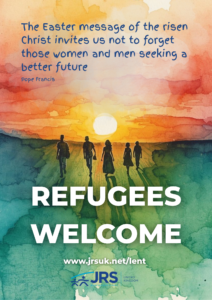
The bright Easter window poster from the Jesuit Refugee Service ” REFUGEES WELCOME “ quotes Pope Francis;
“The Easter message of the Risen Christ invites us not to forget those women and men seeking a better future “.
It is an open hearted, inclusive message, running counter to public discourse in the UK in recent weeks in which an aggressive assertion of the need to assert “Britain’s Christian heritage” has taken a distinctively negative turn. The Conservative shadow justice secretary recently criticised an act of public worship at an event in Trafalgar Square to Mark the end of Ramadan as “an act of domination and therefore division”. GB News recently interviewing the Hungarian president on the state of Western culture seemed to endorse his remark that “Muslims have their own place and this place is definitely not Hungary”, implying ‘and not Britain’! Reform’s Home affairs spokesman Zia Yusuf, himself a Muslim, has announced that Reform will end “the incendiary practice” of unwanted churches being turned into mosques.
A recent Financial Times feature heading, “Is British Politics getting religion?”, drew detailed attention to the American religious right’s well-funded influence on religious politics here. It spelt out that American thinktanks added support to characters such as Nigel Farage and Tommy Robinson (supported by Elon Musk) who claims he converted to Christianity while in prison and who fronted “Unite the Kingdom” Christmas Carol concert.
Robert Lowe MP, expelled from Reform for his extreme attitude to those British citizens of Pakistani heritage now claims that his new “Restore Britain” party will be a Christian based party.
Reform MP Sarah Pochin launching “Christian Fellowship for Reform” announced that “Reform will always stand up for Christianity in this country… we are fundamentally a Christian country and we are proud to be Christians”.
At the Whitehall Christmas Carol service, a Baptist minister was shouted down when she announced that Christ wasn’t English and that “Christ was a refugee at Christmas”.
Commenting on the Whitehall event, the Bishop of Kirkstall, Arun Arora, warned
“we are now in a place where in the next 3 to 5 years there will be a battle for those who want to pursue a kind of UK MAGA agenda as to what Christianity is”.
Notably, the Maga supporters in the United States, such as Nick Fuentes and Tucker Carson no longer refer to “Judeo-Christian values”. Rather they promote an aggressive Christian nationalism increasingly hostile to both Muslims and Jews. President Trump’s MAGA “spending bulldog” Russell Vought has blogged that Muslims were “condemned” because they don’t accept Jesus Christ as God, and since then the list of the condemned seems to keep growing. New Reform MP Robert Jenrick dispenses with Christian heritage references, emphasising that
“by 2030 almost a quarter of the population will have been born outside the UK. That’s an astonishing statistic. There aren’t many successful countries in the world like that”.
Vice President JD Vance has remarked that “under Labour the UK could become the first Islamic nation with a nuclear weapon”, (apparently unaware of the existence of the Islamic Republic of Pakistan, a nuclear power!)
But if the political implications are becoming clearer, where does it leave understanding and practice of the UK Christian heritage?
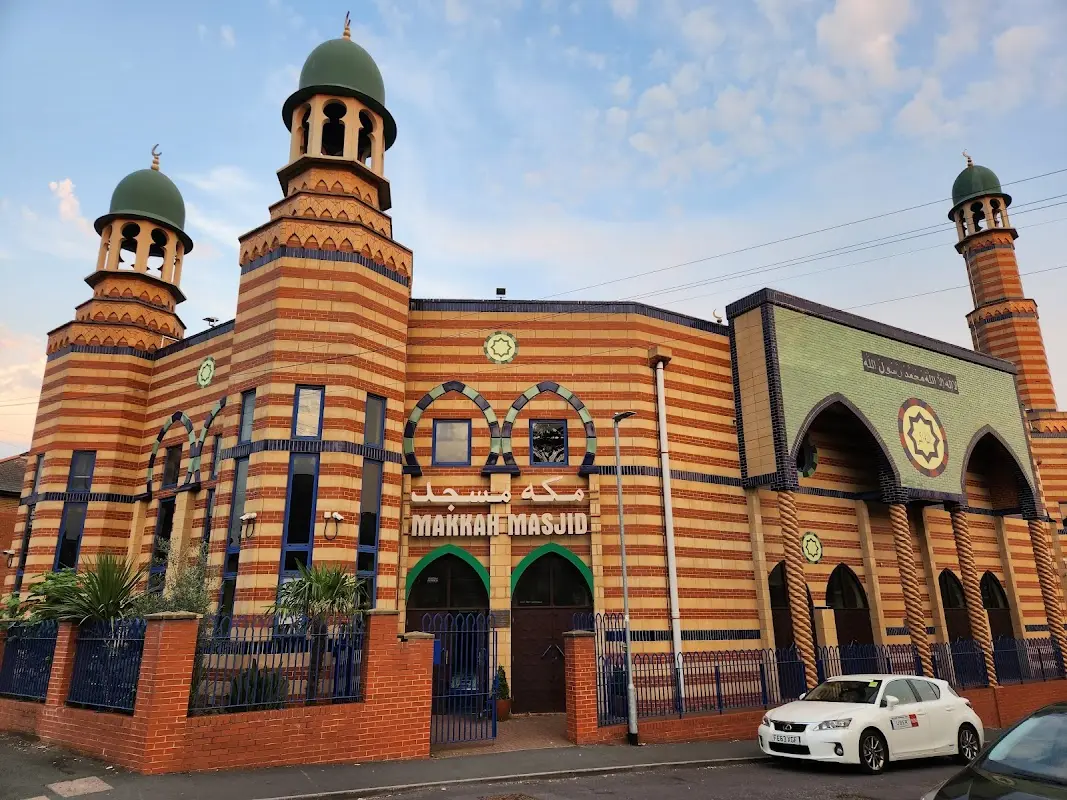
I remember a public meeting in Leeds to consider a mosque application for a Minaret to echo out the daily call for prayer. The meeting opened with a gentleman immediately demanding that as this is a Christian country as an MP, I should simply declare that there should be “Muzzi muzzen” allowed here. To call the situation and try to have a respectful conversation I invited a young Muslim to explain the word “muezzin” and what the call to prayer meant to him. He carefully passionately and succinctly told us why he prayed to God three times a day. I thanked him for a great sermon on prayer. The “Christian country” gentleman shouted out “just because I live in a Christian country doesn’t mean I have to be into God and prayer and all that rubbish,” shocking the Muslims present.
So where does that leave our understanding of what it means to be a Christian here in our society? It can’t be sufficient, as the new Christian right simply assert, that it was King Alfred the great who included the 10 Commandments as a preface to his legal code back in the ninth century. Moreover, the 10 Commandments are only half of the story to be complemented by the Beatitudes spelt out by Jesus in the Gospels.
As the Democrat challenger for the Senate in Texas recently spelt out
“my concern is the members of Congress who are quoting scripture and then violating the teachings of Jesus every day- who are not feeding the hungry, not healing the Sick, not welcoming the stranger.”
Notably at the funeral of the Christian right Campaigner Charlie Kirk, President Trump said
“Kirk didn’t hate his opponents. He wanted the best for them. That’s where I disagree with Charlie. I hate my opponents and I don’t want the best for them.”
In his 1997 book, The Art of the Comeback he set out his ethics,
“Get even. During the bad times I learned who was loyal and who wasn’t. I believe in an eye for an eye. A couple of people who betrayed me need my help now and I am screwing them against the wall. I am doing a number…. and I’m having so much fun”.
In the recent warmongering, President Trump, and his secretaries have regularly “othered” and dehumanised people, whipping up hatred, revenge and violence both at home and abroad.
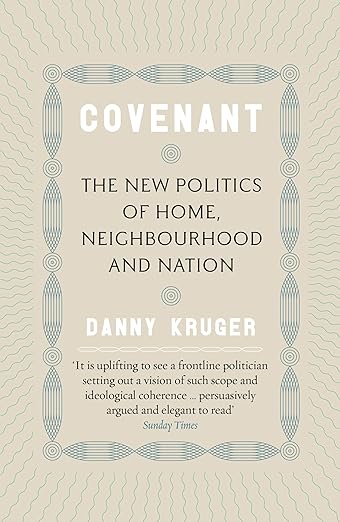
Closer to home, Danny Kruger MP, who defected to Reform, tried to generate a Politics of a new Christian political Centre without resorting to the divisive statements such as those of billionaire Jim Radcliffe (Britain is being “colonised”) and Matthew Goodwin’s challenges to ethnic minorities as dis-entitled citizens.
Kruger get some support from James Orr, an evangelical professor of the philosophy of religion at Cambridge, recently appointed as the policy advisor to the Reform Party. JD Vance describes him as his “British sherpa”! He chairs the advisory board of the “Centre for a Better Britain” and is a member of the advisory council of the “Free speech Union”. He has described asylum seekers as “invaders”.
But his present interest is in developing a “vision animated by the Politics of home”, emphasising that
“human beings are not fungible economic units but rooted beings who love particular places particular people and particular ways of life”.


In an uncertain and turbulent world of ruthlessness and precarity, this approach can resonate.
The difficulty is that his reference to “particular place” can build in an attitude of exclusion. In other words., “particular homes” are not for everyone. This is reminiscent of JD Vance’s interpretation of Saint Augustine’s theology of Love in which he claims that in Augustine’s “Ordo Amoris”, family, neighbour and community come before the rest of the world.
Vance argued that immigration crackdowns are compatible with Christian love. Love is measured out through concentric circles always putting in one’s own family and immediate community ahead of service to the stranger Pope Leo has responded
“JD Vance is wrong. Jesus doesn’t ask us to rank our love for others. He spelt out that true Christian love is not a. ‘rationed’ ranking system but one that demands care for all”
and he criticises the abuse of Catholic theology to justify restrictive Draconian migration policies.
But Professor Orr has pushed Vance’s position even further, claiming that the nation is
“the outermost concentric circle of concrete affection”
adding
“if you think that the message of the parable of the Good Samaritan is that Samaria should welcome and care for all Judeans dispossessed, think again”.
But as the theologian Luke Bretherton stresses. the urgent needs of strangers can supersede those of our close circles. Significantly both Pope Benedict XVI and Pope Francis included major chapters explicating in detail the parable of the good Samaritan in their social justice encyclicals. In Fratelli Tutti” (para 80) Pope Francis writes:
“Jesus told the parable of the good Samaritan in answer to the question ‘who is my neighbour?’. The word ‘neighbour’ in the society of Jesus’s time usually meant those nearest us. It was felt that help should be given primarily to those of one’s own group and race…. Jesus completely transforms this approach he asks us not to decide who is close enough to be our neighbour but rather that we ourselves become neighbours to all. Jesus asked us to be present to those in need of help regardless of whether or not they belong to our social group.”
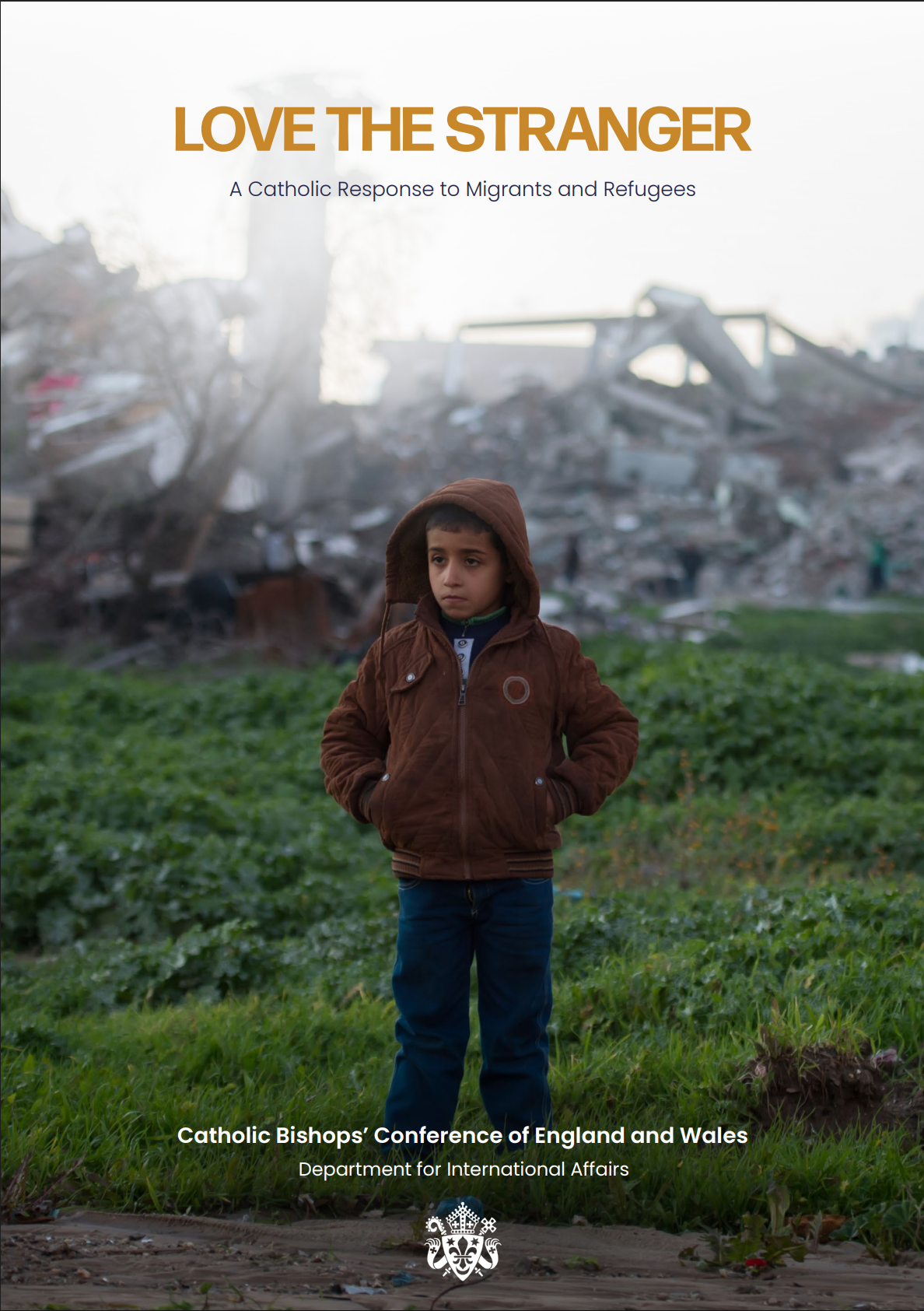
Notably, the Catholic Bishops Conference of England and Wales published “love the stranger” which spells out this message.
As we enter the Paschaltide mystery of the passion, crucifixion and resurrection of Jesus at Easter, it is perhaps worth commenting on the misrepresentation of the flags bearing St George’s Cross, which have appeared on lamp posts throughout the land.
They are now associated with abusive and violent demonisation of migrants – regardless of the fact that many migrants are themselves Christians. The Cross is the traditional symbol of an instrument of a slow and agonising death for those not protected by Roman citizenship. It became a scandalous declaration that no human life was beyond the love of God as Rowan Williams spelt out in his feature in the new statesman in December 2025. He writes,
“it was a declaration that human community was shockingly larger than what any state or culture could define and that to belong in the realm of God people would have to recognise that they stood on the same level as all kinds of unwelcome strangers and let go of their pride in belonging to any kind of privileged powerful or innocent Group. And when early Christian martyrs declared Christ is King when faced with torture and execution what they were saying is not that they were part of a movement aimed at universal control of society but quite the opposite. They were declaring that no earthly political system could make absolute demands on it’s citizens. Ultimately, we are answerable not to some kind of sacred National or imperial authority but to the vision of a reconciled community of people who have met the possibility of love and homecoming at the point of their deepest loss and failure. In other words, the symbolism of the Cross was something that in principle spoke to all kinds of dispossessed and insecure people and promised a life giving absolving hopeful kind of human association”
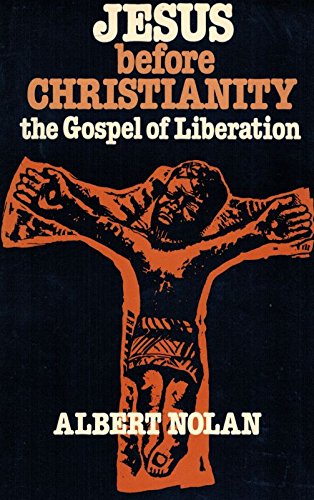
Fr. Albert Nolan OP, in his book ‘’, points out that we don’t really take the Sermon on the Mount seriously;
“we don’t give away our coats; we don’t go the extra mile; we don’t forgive 70×7; and we certainly do not put all our hope and trust in God”.
We all have a little list of who we wouldn’t want to live next door. St Benedict, in his rule, says:
First of all, love the Lord God with your whole heart, your whole soul and all your strength,
then love your neighbour as yourself.
Do not kill.
Do not commit adultery.
Do not steal.
Do not covet.
Do not bear false witness.
Respect all people.
And never do to another what you would not want done to yourself.
He goes onto insist;
“give help and support to the poor, clothe the naked, visit the sick, and bury the dead, console and counsel those who suffer in time of grief and bring comfort to those whose sorrow”.
St Matthew’s Gospel is strong on making connections with the Old Testament books of the Jewish tradition and his account of the sermon on the Mount contains echoes from the short book of Lamentations written after the 587 Fall of Jerusalem (“don’t give with one hand and take with another”).
The most familiar section of Lamentations is used in the Good Friday liturgy to recall the physical dismantling of Christ on Calvary. But it begins by describing the mourning of the city of Jerusalem and its inhabitants and the breakdown of community. But out of this darkness shines a ray of unconquerable trust in God and of wholehearted repentance.
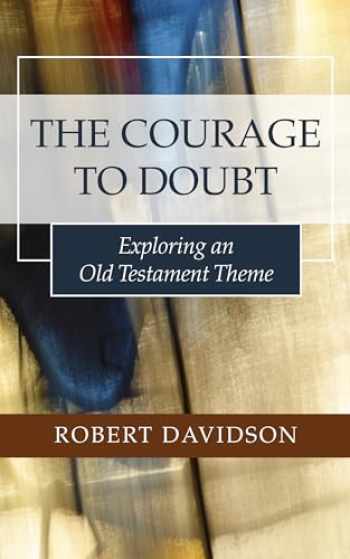
In the words of Robert Davidson’s comment “The Courage to Doubt”
“The darkness of disaster, though deserved, cannot be God’s final word to the community. They remain his servants, his people who may confidently expect to experience in the future as they have done in the past, is steadfast love and his dependability. Despite the grief, they experience, God’s compassion never fails; it is new every morning “
Brooding on my anguish and affliction
is gall and wormwood.
My spirit ponders it continually
and sinks within me.
This is what I shall tell my heart,
and so recover hope:
the favours of the Lord are not all past,
his kindnesses are not exhausted;
every morning they are renewed;
great is his faithfulness.
‘My portion is the Lord’ says my soul
‘and so I will hope in him.’
Lamentations 3:19
*****************************************