
31 Oct – Update on Carbon reduction in the Leeds Diocese
In July we reported how the Commission had engaged with the University of Leeds for an MSc student on the Sustainability and Consulting course (Mohamed Juma) to evaluate whether the Diocese could do more to reduce its carbon footprint.
Climate change remains one of the biggest challenges to the world today. The challenge is huge because it needs action by everyone in the world – not just governments and big businesses but individuals and small companies and organisations like the Diocese as well.
The challenge for the Diocese is that it has a significant financial deficit so does not have the monetary resources to invest large amounts in ‘green’ technology just because it is a good thing to do.
Mohamed surveyed a sample of different churches across the diocese. He examined the applicability of a range of carbon reduction technologies: solar panels, wind turbines, and general construction materials – such as draught proofing, insulation levels, double glazing and the use of energy efficient lighting.
There was no ‘silver bullet’ in what Mohamed found out. Many of the churches he looked at do have roofs that would be very suitable for solar panels, for instance. A number have a large roof at a suitable angle on an East-West orientation (so they get the sun all day). Potentially, some of these roofs could support installations that could generate in the region of 30kW. However, whilst the cost of solar panels has reduced dramatically in the last five years, the amount paid for the electricity generated has fallen by an even larger amount. Hitherto, there have been companies interested in ‘renting’ roofs – which would have been a cost-neutral way of reducing the diocese’s carbon footprint. However, due to the reduction the amounts paid for the electricity these schemes seem to have largely disappeared.
This is not to say that individual parishes should not consider doing it. It is especially worth considering if a church building has to have some work done on its roof. A significant part of the cost of installation is hire of scaffolding whilst installation takes place – so if this can be done off the back of other work that has to be done then it becomes a much more attractive proposition.
A striking finding relates to the heating systems installed in different churches. Most of the churches had relatively new central heating boilers. However, in at least two of the churches visited the boilers themselves were of the order of 50 years old. Whilst it is fantastic that these boilers have lasted so long, they are very inefficient when compared with more recent boilers. So there may well be an economic case to be made in such circumstances.
What Mohamed’s work has illustrated to us is that there are possibilities but that they need detailed investigation and promotion at a parish level. If you are interested in helping us to do this then please email us at mailto:jandp@dioceseofleeds.org.uk
 In his message for the first World Day Pope Francis asks all of us, whatever our means or background, to unite in love, in acts of service to one another and in genuine encounter.
 The Trust has recently appointed a new Diocesan Representative for the Leeds Diocese: Liz Andrew. She is starting work locally to raise awareness of the subject of human trafficking and modern slavery and of the work of the Medaille Trust.
 Liz can be contacted by email at
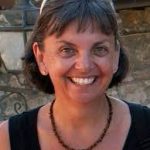 After some formal introductions, Pat Gaffney, General Secretary of
 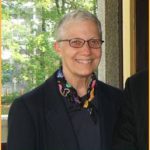 Marie Dennis is an author of several books and Co-President of Pax Christi International. She has been a leading light in the
 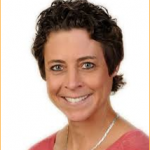 Maria Stephan is senior policy fellow at the United States Institute of Peace (USIP), where she focuses on the dynamics of civil resistance and its relevance for violent conflict prevention and democratic development. Maria is the ‘go to’ person in terms of the quantitative academic research into the examination of the outcomes of violent vs nonviolent approaches to conflict resolution. Her collaborations with other researchers have examined over 400 major conflict situations since 1900. Cutting to the chase, in terms of outcomes, nonviolent approaches are seen to be around twice as successful as violent approaches, on a range of measures. The main problem is that ‘if the only tool you have is a hammer then all your problems start to look like nails.’ Countries spend billions on having plenty of violence-based ‘tools’ in their conflict resolution toolkit. Very few spend significant amounts, if any, on developing nonviolent approaches to conflict resolution. Isn’t it time we really started advocating for change in this area of Government policy?
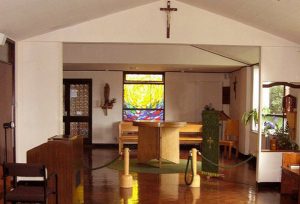 The Carmelite Sisters have lived at Wood Hall, near Wetherby in the Leeds diocese for almost 50 years. Our life is one of withdrawal from the world for the sake of an intense life of prayer. One might well ask if our lives are of any value to anyone, especially when considering matters of Justice and Peace? But it is only when we have a deep belief in our union, as Christians, with Christ’s own prayer for His people, that our way of life here makes any sense. Our prayer focus has to be world-wide.